Lucida Medical
Lucida Medical develops AI software that helps radiologists detect and assess prostate cancer on MRI.
About Lucida Medical
Lucida Medical is a UK medical technology company specialising in AI-assisted prostate cancer detection and assessment using MRI. Its Prostate Intelligence (Pi™) software supports radiologists with lesion identification, risk assessment, automated segmentation and integration into existing clinical workflows.
Pi™ has been evaluated in the PAIR-1 multicentre study involving eight NHS hospitals. Published in European Radiology, the study demonstrated performance comparable to expert radiologists, with 95% sensitivity and 67% specificity for detecting clinically significant prostate cancer in its external validation dataset.

Use cases
Prostate MRI plays a central role in detecting clinically significant prostate cancer, but interpretation requires specialist expertise and can vary between radiologists. The PROMIS study highlighted important diagnostic challenges, including missed significant cancers and potentially avoidable biopsies. Growing imaging demand and limited specialist capacity add further pressure, creating opportunities for AI-assisted assessment and more efficient diagnostic workflows.
- Reporting quality varies between readers, and significant cancers can be overlooked, particularly where no prostate specialist is available.
- Many men without significant cancer are referred for biopsy, an invasive and costly procedure that a confident MRI assessment can help avoid.
- Contouring the prostate and lesions, calculating volumes and reporting all take time, while patients can wait months for a diagnosis.
Products
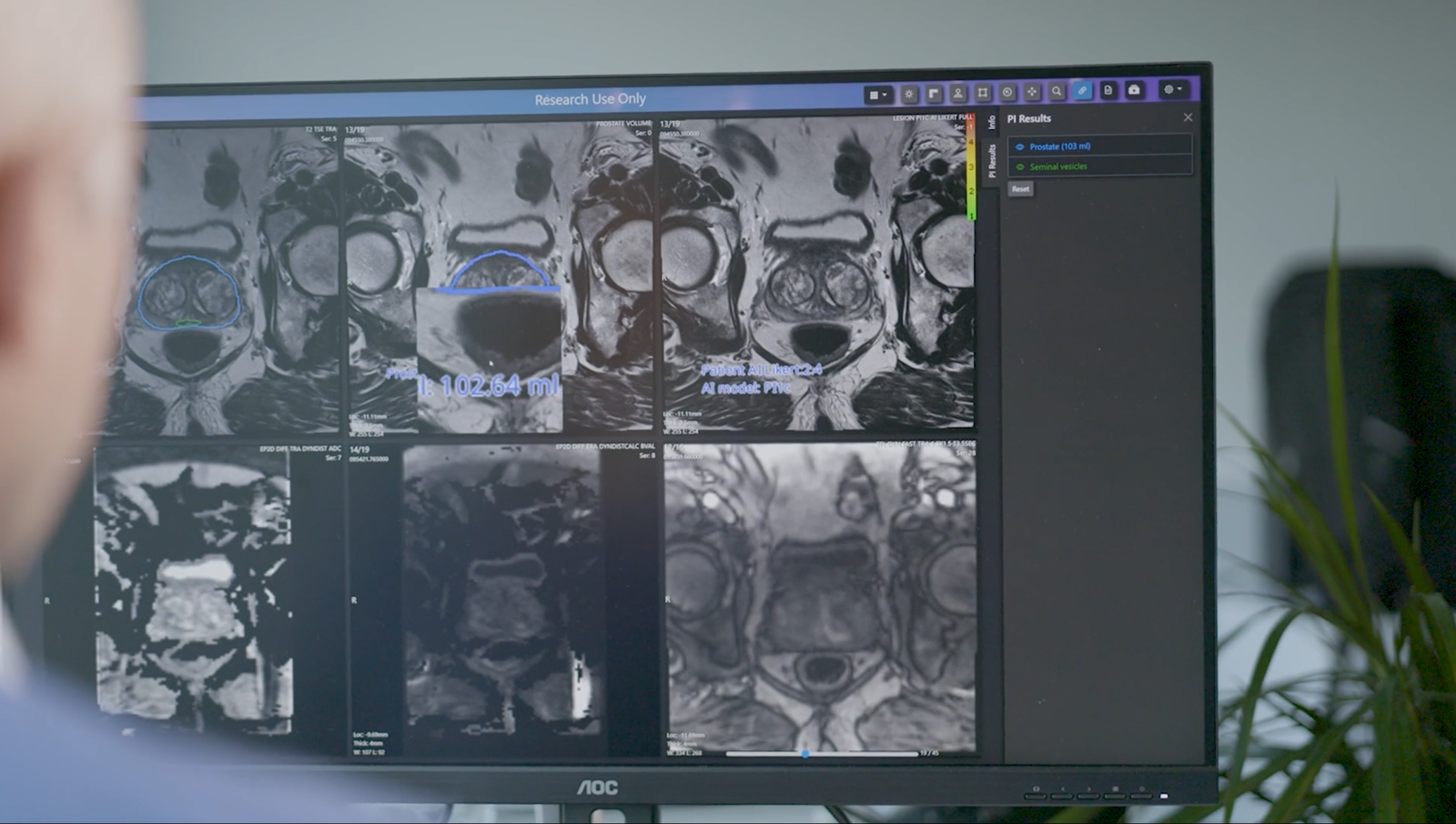
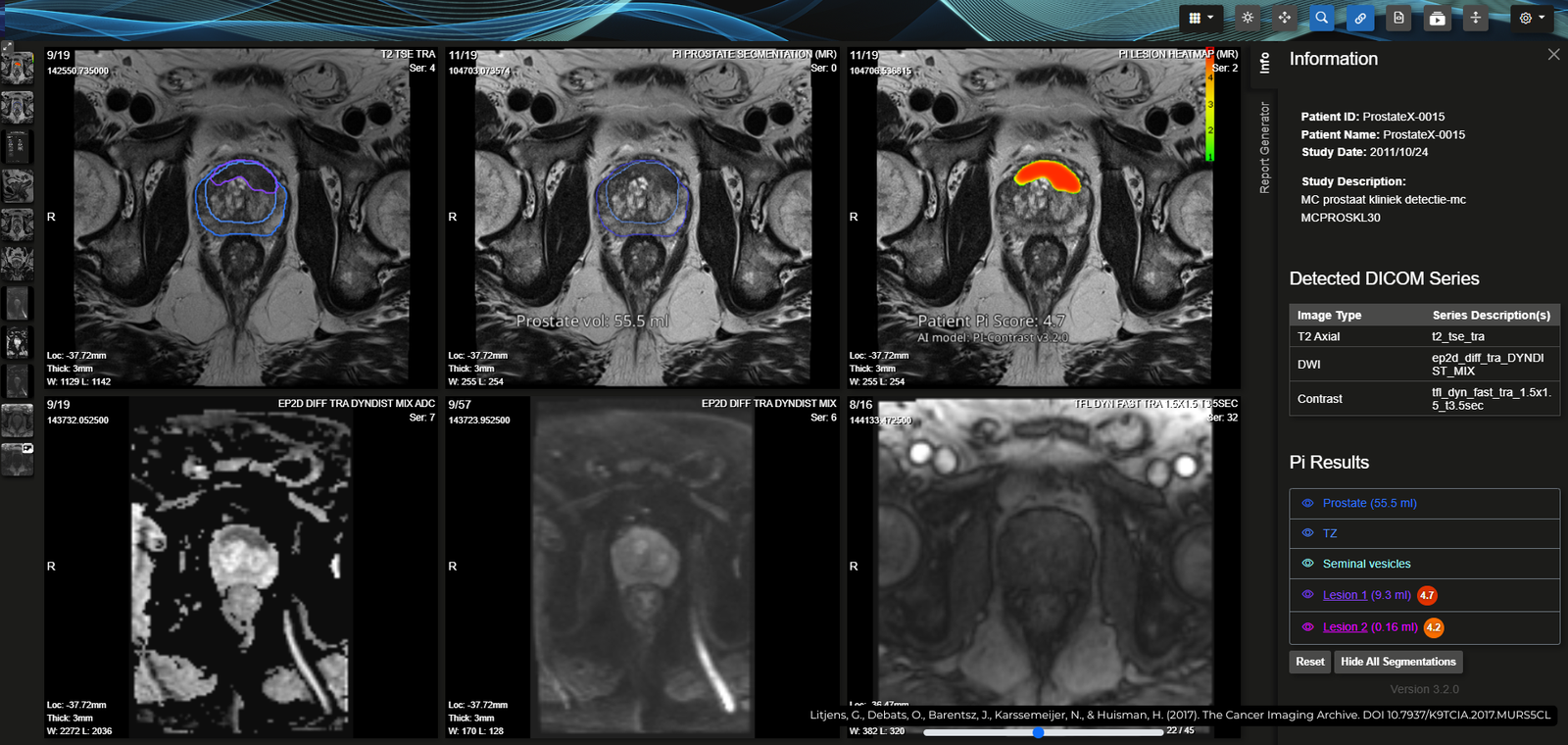
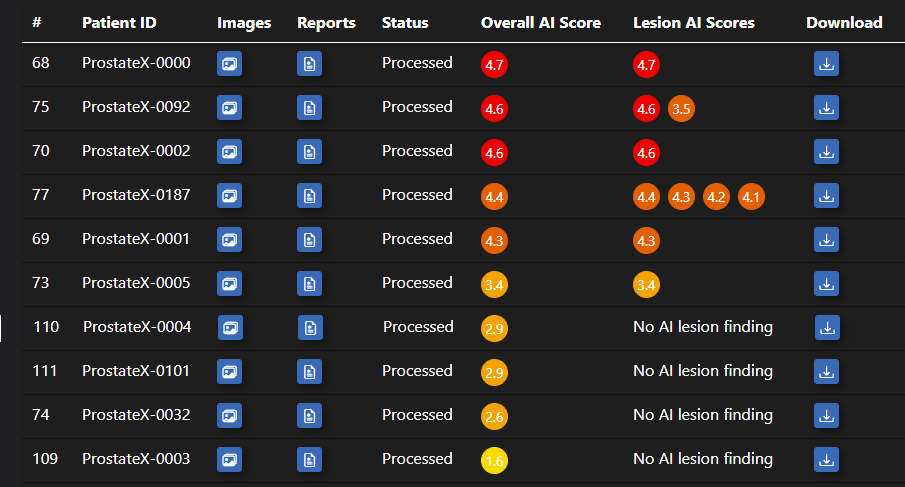
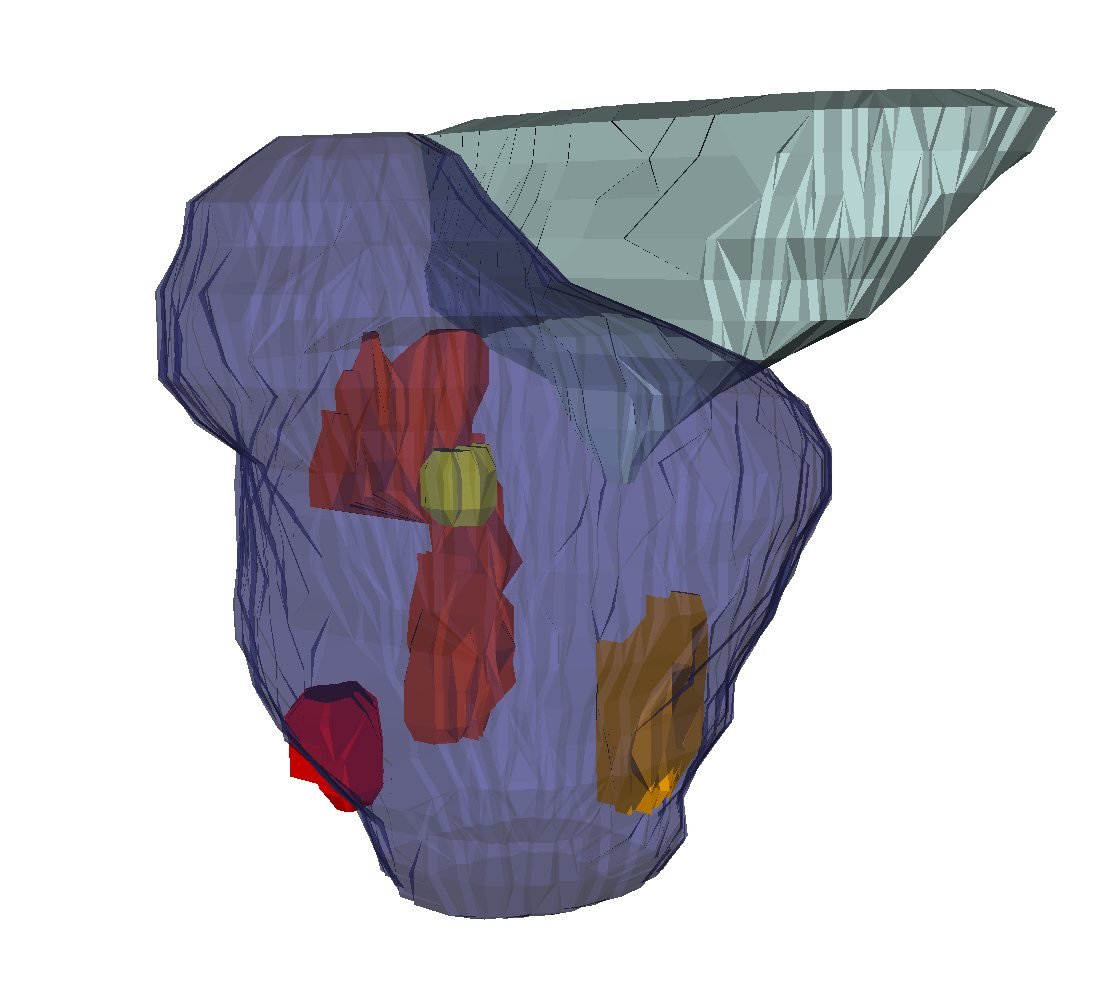
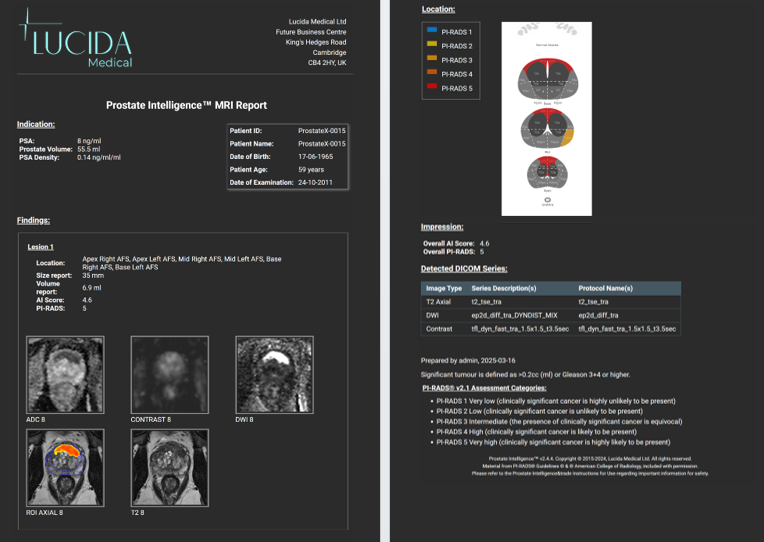
Prostate Intelligence (Pi) – analyses prostate MRI, highlights suspicious lesions, gives each patient and lesion a risk score from 1 to 5, and produces editable 3D segmentations and volumes.
Key benefits
Pi™ provides radiologists with AI-assisted prostate MRI assessment, including patient and lesion risk scores, segmentations and volume measurements. Results can be reviewed and adjusted within the clinical workflow before being transferred to PACS. The software also combines Pi’s AI-generated risk score, PSA density and PI-RADS assessment into a single integrated risk score, supporting more consistent clinical decision-making.